Rochling
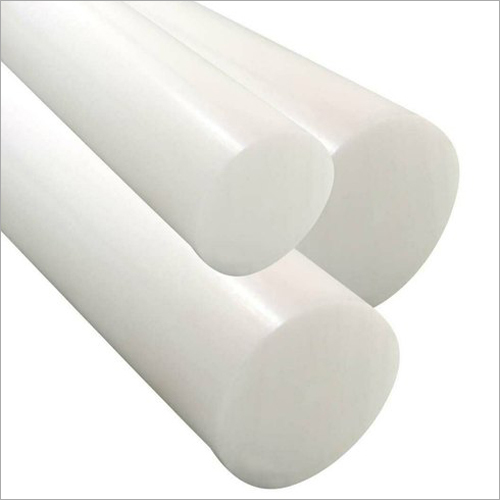
PE - UHMW / PE 1000
PE-UHMW (Ultra-High Molecular Weight Polyethylene) and PE 1000 are advanced polyethylene materials renowned for their exceptional properties. With molecular weights ranging from 1 to 7 million amu, these plastics exhibit superb abrasion resistance, impact strength, and low friction. Widely employed in diverse sectors, including industry and medicine, they excel in applications demanding durability and high-performance characteristics. Whether used in industrial components, conveyor systems, medical implants, or other specialized areas, PE-UHMW and PE 1000 contribute to enhanced performance and reliability.
Project Description
Project focuses on the versatile applications of Polyethylene-Ultra-High Molecular Weight (PE-UHMW) and Polyethylene 1000 (PE 1000) in diverse industries. Investigating their exceptional properties, such as superior abrasion resistance, impact strength, and low friction coefficients, the project aims to identify optimal use cases and manufacturing processes for these materials.
Features
Ultra-High Molecular Weight
PE 1000 is a high-density polyethylene with a molecular weight around 1 million amu, offering a balance of strength and flexibility.
Abrasion Resistance
Similar to PE-UHMW, PE 1000 is valued for its excellent abrasion resistance, making it suitable for applications with high wear.
Impact Strength
Exhibits good impact strength, providing durability in applications subjected to frequent impacts.
Chemical Resistance
Displays resistance to various chemicals, enhancing its suitability for applications in challenging chemical environments.
Low Coefficient of Friction
Like PE-UHMW, PE 1000 has a low coefficient of friction, contributing to its use in applications requiring low friction and reduced wear.
Versatility
Versatile in its applications, PE 1000 is used in industries ranging from manufacturing and material handling to medical and agricultural applications.
Type of product
Compression moulded sheets, pressed sheets, skived sheets, round rods, square tubes, U profiles
Colours
Natural, black, green, special colours
Properties
High abrasion and wear rasistance
Low coefficient of friction
High impact strength
High resistance to corrosion and chemicals
Self-lubricating properties
No water absorption
Excellent performance capability when used at temperatures down to-200 C
Resists high dynamic stresses
Typical areas of application
Chemical engineering
General conveyor technology
Chain and cam guidance
General engineering
Beverage and food industry
Packing industry
Excellent resistance to stress cracks
PE - HD, PE300 - High Density Polyethylene
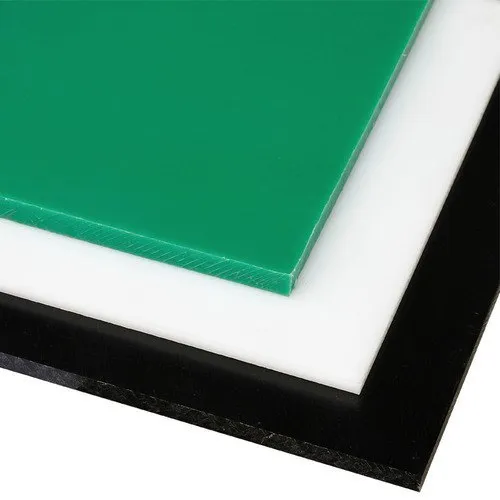
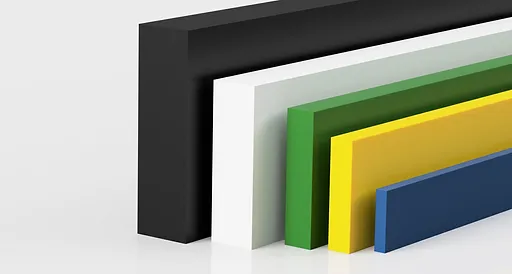
High-Density Polyethylene (HDPE) is a versatile and extensively utilized thermoplastic polymer, demonstrating exceptional properties that have positioned it prominently across diverse industries and applications. As a member of the polyethylene family, HDPE is recognized for its remarkable high strength-to-density ratio, rendering it a preferred material for a wide range of consumer and industrial applications.
Project Description
High-Density Polyethylene Rod (HDPE) stands out as a top-quality, FDA-approved material with outstanding impact resistance. Boasting high tensile strength, low moisture absorption, and resistance to chemicals and corrosion, HDPE proves itself as a reliable choice. Its lightweight nature, coupled with non-toxic and non-staining attributes, makes it versatile for a variety of applications across different industries.
Features
Follows FDA/USDA Food Handling Guidelines
Compliant with FDA/USDA standards for food handling, ensuring safety and suitability for applications in the food industry.
Lightweight
Possesses a lightweight structure, contributing to ease of handling and versatility in various applications.
Chemical and Corrosion Resistant
Exhibits resistance to chemicals and corrosion, enhancing durability and making it suitable for applications in challenging environments.
Low Moisture Absorption
Demonstrates low moisture absorption, maintaining stability and performance even in conditions with high humidity.
Excellent Impact Resistance
Offers excellent impact resistance, ensuring durability and longevity in scenarios where mechanical forces are prevalent.
High Tensile Strength
Features high tensile strength, providing robustness and reliability in structural applications.
Cutting Boards
Widely used in kitchens, cutting boards serve as essential tools for slicing, chopping, and preparing food ingredients.
Light Duty Chain Guides
Applied to ensure the smooth and precise movement of chains in low-load applications, such as conveyors.
Food Processing
Deployed in the transformation of raw ingredients into a variety of products, involving activities like cleaning and cooking.
Chair and Belt Guides
In vehicles, these guides ensure the proper positioning and safety of occupants by preventing movement and ensuring a secure fit.
Spiral Conveyors
Applied in manufacturing and distribution processes, these conveyors efficiently transport goods between different elevations within a compact footprint.
Chemical Tanks
These tanks play a crucial role in storing and handling a variety of chemicals, including liquids, gases, and powders, in both industrial and laboratory settings.
Orthotics and Prosthetic Devices
Utilized to provide support and functionality for individuals facing musculoskeletal challenges.
Mining Chute Liners
Used to protect equipment chutes, these liners enhance durability by reducing wear and tear while facilitating the smooth flow of materials in mining operations.
Wear Strips, Guide Rails, and Neck Guides
Frequently employed in medical and rehabilitation settings, these components provide support and alignment.
Extruded Profiles
Find diverse applications in industries such as construction and electronics, serving as customizable components for various purposes.
Chemical and Corrosion Resistant
Exhibits resistance to chemicals and corrosion, enhancing durability and making it suitable for applications in challenging environments.
Water Storage
Essential for domestic, industrial, and emergency purposes, these storage supply clean water for consumption and irrigation.
Thermoforming
Utilized to shape plastic sheets into a diverse range of products and consumer goods, achieved by heating and forming the material using molds.
Corner Tracks
Used in sliding door and window systems to facilitate smooth and controlled movement around corners, enhancing overall functionality.
Guide Rails
Used in industrial automation and transportation equipment to enable precise and controlled movement of machinery.
Type of product
Coils
Compression moulded sheets
Extruded sheets
Round rods
Square tubes
U profiles
Welding wire
Colours
Black, Natural
Properties
Very good welding and processing properties
Good chemical resistance
High adhesion in a composite system and so highly suitable for tank building
Low weight
Typical areas of application
Chemical engineering and tank building
Corrosion protection
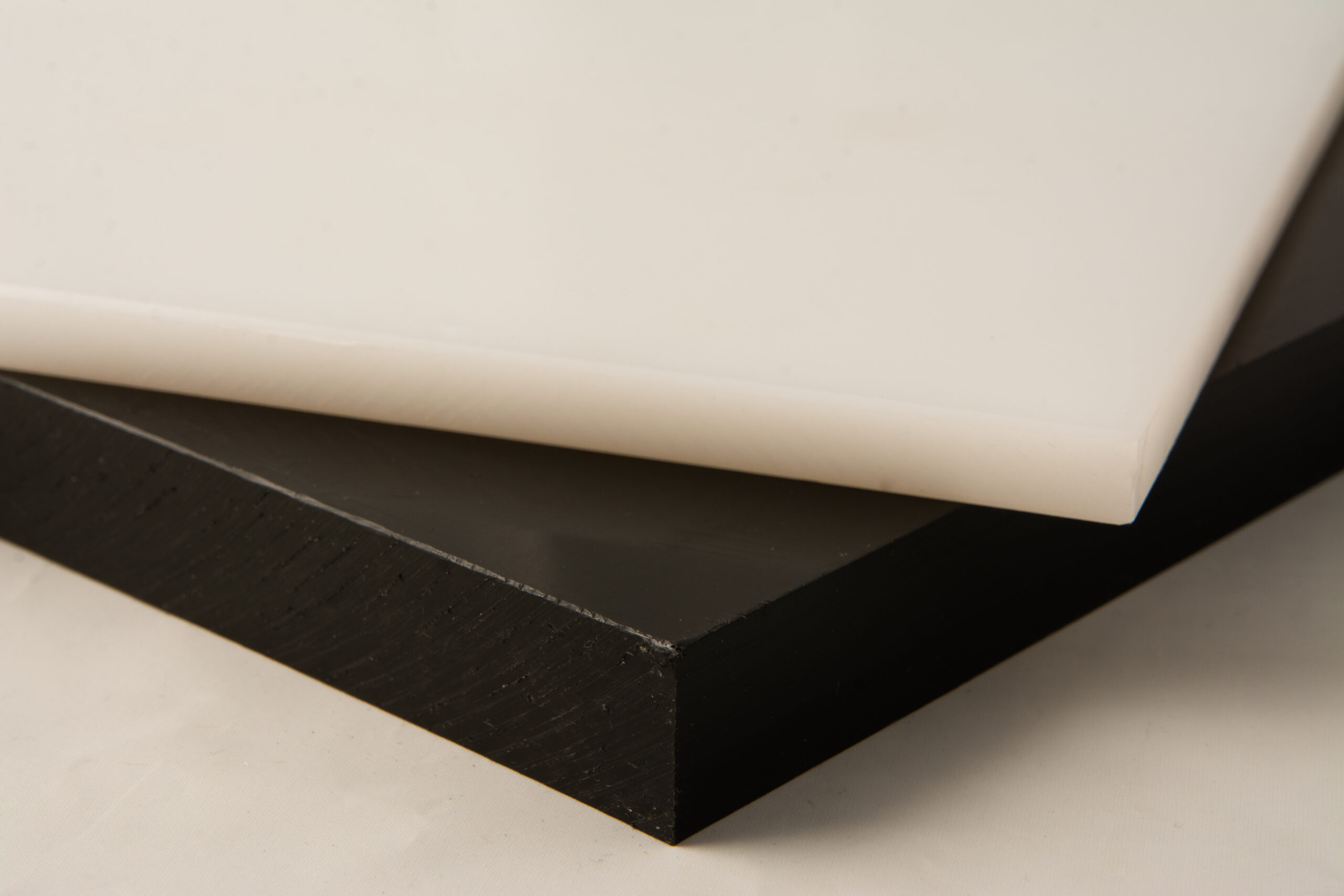
POM - C Polyformaldehyde (Copolymer)
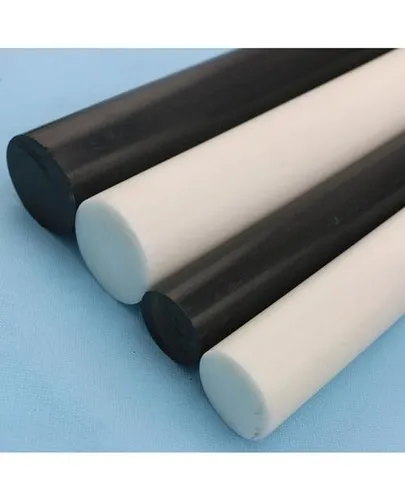
Polyacetal, commonly referred to as polyoxymethylene (POM), stands out as a versatile and extensively employed engineering thermoplastic. This polymer belongs to the family of polyoxymethylenes, distinguished by their exceptional mechanical properties, dimensional stability, and resistance to chemicals and moisture. Due to its unique combination of properties and ease of processing, polyacetal finds widespread use across various industries.
Project Description
Polyacetal (POM) sheets and rods stand out as some of the strongest and stiffest among all thermoplastics. These plastic materials exhibit good fatigue life, low moisture sensitivity, and high resistance to solvents and chemicals. Additionally, Polyacetal products feature commendable electrical properties. Both Homo-polymer and Copolymer grades of Polyacetal are available, including an enhanced bearing grade material. As a semi-crystalline engineering plastic, Polyacetal (POM) proves advantageous in various engineering applications, particularly in CNC machining processes, where its properties are well-suited for precision manufacturing.
Features
Excellent resilience
Excellent machinability
High mechanical strength
Physiologically inert
Gear Wheels with Small Modulus
Used in precision machinery where a compact design and fine tooth engagement are essential for optimal performance.
Bearings and Gears with Small Clearances
Essential in precision engineering applications, particularly in aerospace and medical devices, where minimal clearances are crucial for efficient operation.
Dimensionally Stable Precision Parts
Critical in optics to ensure accurate alignment and performance, particularly in telescopes.
Cams
Applied in machinery to convert rotary motion into reciprocating motion, enabling precise control and synchronization of movements.
Valve Seats
Found in internal combustion engines and industrial valves, they serve to provide a sealing surface, enhancing fluid flow control.
Electrically Insulating Components
Vital in electronics to prevent electrical conduction and ensure safety, commonly used in circuit boards and connectors.
Heavily Loaded Bearings and Rollers
Utilized in industrial equipment, such as mining machinery and construction equipment, to provide robust support under heavy loads.
Snap Fit Assemblies
Employed in consumer electronics and product packaging to securely and easily join components without the need for fasteners.
Properties
Good chemical resistance
High dimensional stability
Low moisture absorption
Very good sliding properties
High abrasion resistance
Low creep tendency
Good machinability
Favourable electric and dielectric behaviour
Typical areas of application
Mechanical engineering
Electrical industry
Medical engineering
Electronic industry
Automotive industry
Textile industry
Food processing industry
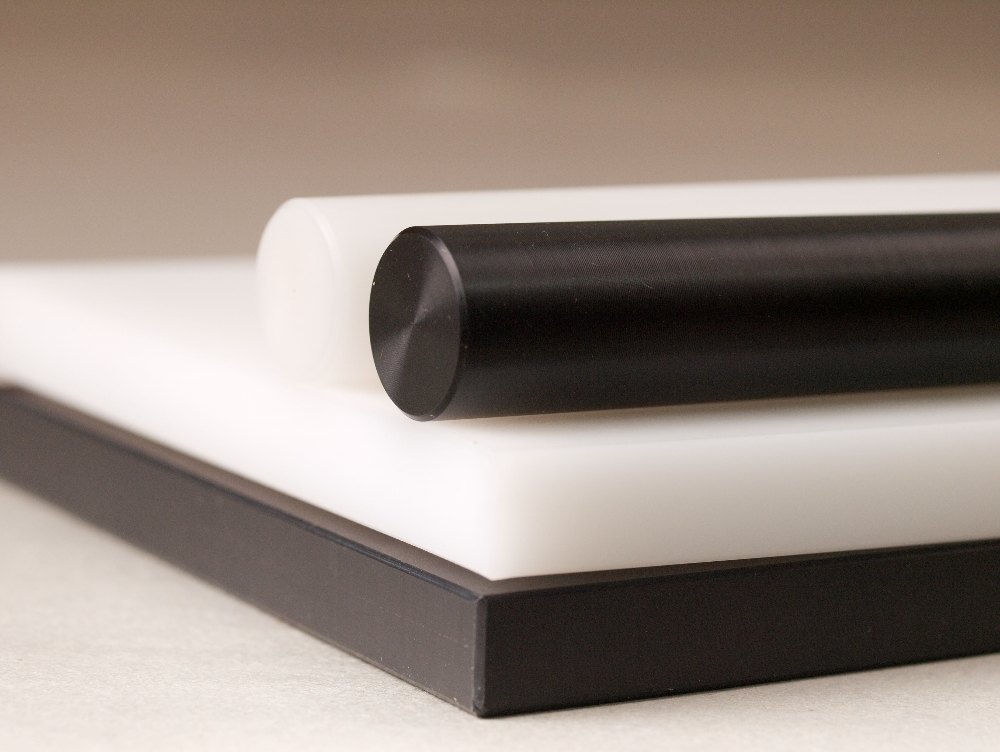
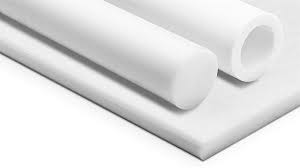
PEEK - Polyetheretherketone
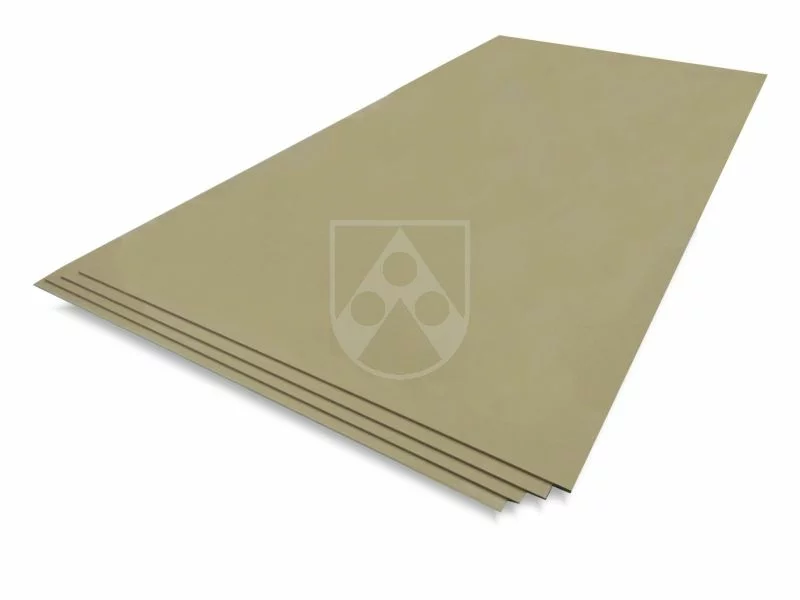
PEEK material, or polyetheretherketone, stands as a high-performance semi-crystalline engineering thermoplastic characterized by exceptional resistance to harsh chemicals, minimal moisture absorption, commendable fire performance, outstanding mechanical strength spanning a wide temperature range, and solid dimensional stability.
Features
Impressive heat deflection temperature
Inherent flame retardancy
Very good chemical resistancy
Good machinability
Resistance to high-energy radiation
High creep resistance
Properties
Excellent dimensional stability
Flame retardant and self-extinguishing
Very high resistance to high-energy radiation
Very good sliding properties
High abrasion resistance
Optimised balance of stiffness, tensile strength and impact strength
Low creep tendency
Good machinability
Good thermoformability
Good adhesive properties
Good weldability
High dimensional stability under heat
Vey high continous service temperature
Low coefficient of thermal expansion
Good electrical insulating properties over a broad temperature range
Typical areas of application
Components need to be exposed under high temperature, mechanical load, X-ray or gamma ray.
Antenna electronics, transportation, medical technology, aviation and chemical engineering, such as electrical insulators and housing, elec tric wire and cable insulation, rotor spider, friction disc and sealing parts, shock absorber, analytical equipment components, dialysis equipment components, valve lining, water pump impeller.
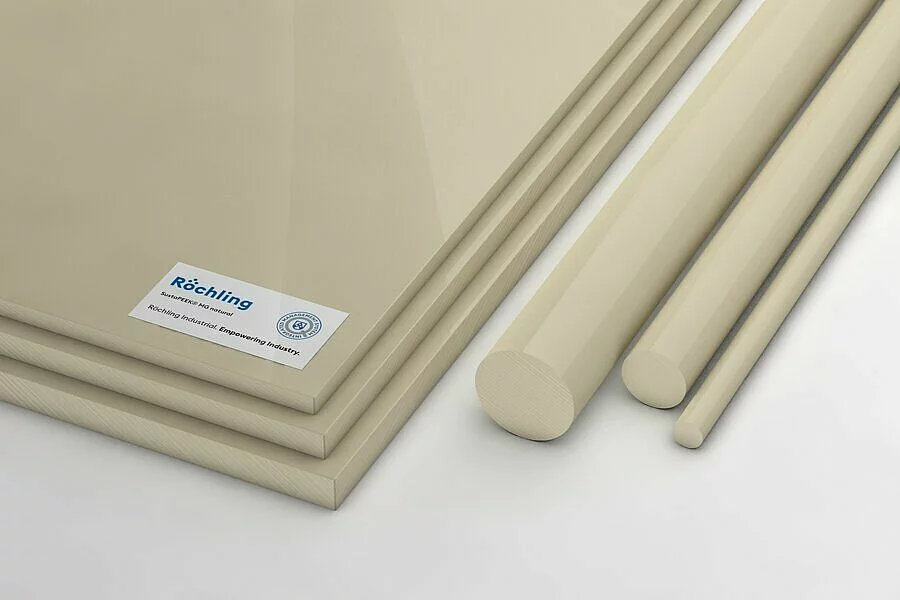
PSU - Polysulfone
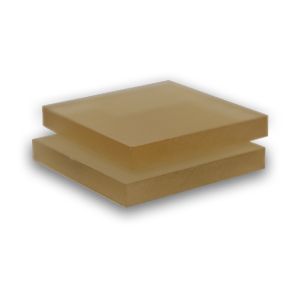
Properties
High rigidity at good dimensional stability
Very high continuous service temperature resistance
Very good hydrolysis resistance
Hardly inflammable
Self-extinguishing
Very low smoke development
Good radiation resistance against high energy
High tensile strength
High hardness
Good machinability
Outstanding thermoformability
Good adhesive properties
Very good weldability
Low coefficient of thermal expansion
Very good electrical insulation properties
Exceptionally low radiation absorption in the microwave range
Typical areas of application
Mechanical, thermal and electrical high-voltage structural components. particularly if transparency is required, or for parts that are frequently sterilised.
Electrical and electronic industry e.g. coil bodies, switch parts, plug-in connectors, microwave components
Medical technology e.g. laboratory equipment, medical devices
Foodstuffs industry e.g. milking machine parts, valves, bottling units
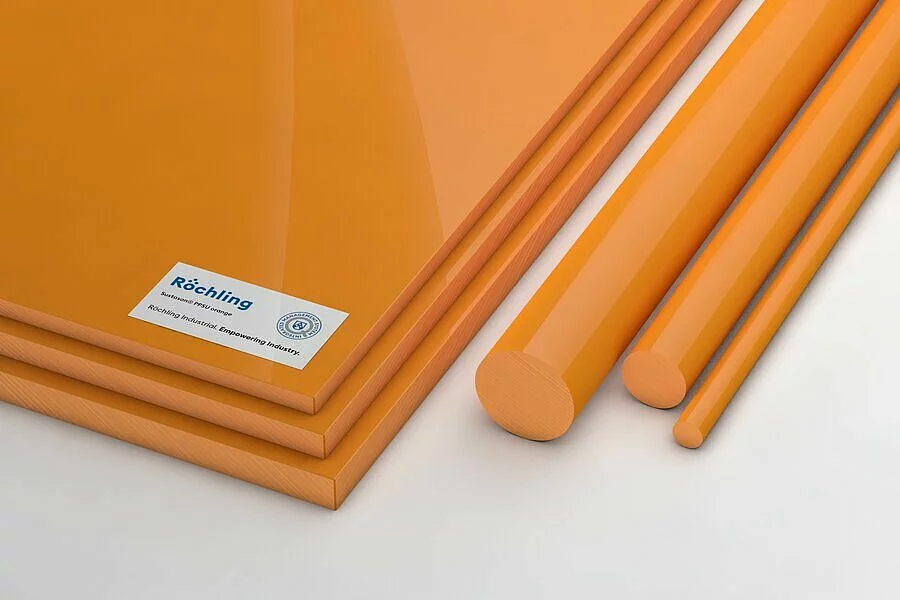
PPSU - Polyphenylensulfon
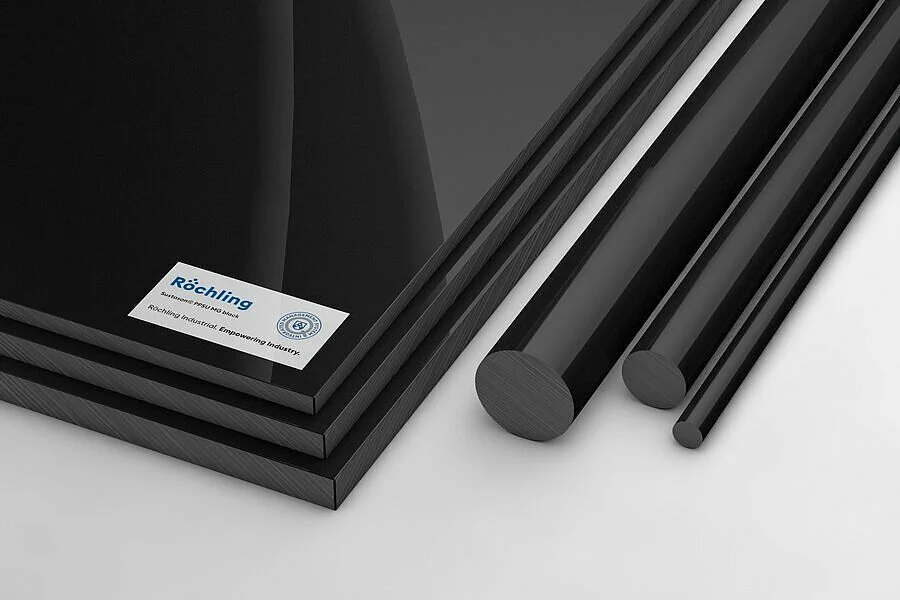
Properties
Very good sterilisability
High heat deflection temperature
High rigidity and stiffness
Very low smoke development
Highly resistant to gamma and x-rays
High tensile strength
Extremely high impact strength
Good machinability
Outstanding thermoformability
Good adhesive properties
Very good weldability
High continuous service temperature
Very good electrical insulation properties favourable dielectric behaviour
Typical areas of application
Electrical industry
Medical engineering
Rehabilitation
PVDF Polystone
PVDF, short for polyvinylidene fluoride, or PVF2, belongs to the class of materials known as fluorocarbons or fluoropolymers. These materials are distinguished by their high thermal stability and excellent chemical resistance.
Type of product
Compression moulded sheets, extruded sheets, round rods, square tubes, U pro- files, welding rods, coils
Colours
Natural
Features
Very good chemical resistance
Continuous service temperature up to 150°C
Very good weldability
Inherent flame retardancy
Good slide and wear properties
Good machinability
Properties
High temperature resistance
Outstanding chemical resistance
Low coefficient of friction
Excellent ageing properties
Good electrical properties
Almost no moisture absorption
Excellent weldability
Typical areas of application
Clean
Semiconductor industry
Chemical engineering
Tank building
PET - Polylethene Teraphthalate
Properties
Excellent dimensional stability
Very low moisture absorption
Excellent creep behaviour
Good sliding properties
High wear resistance
High tensile strength and stiffness
Good machinability
Low coefficient of thermal expansion
Typical areas of application
Mechanical Engineering
Ship building
Electrical industry
Electronic industry
Materials handling industry
Food processing industry
Plant engineering